In the fast-paced world of automotive and motorcycle maintenance, efficiency isn’t just a luxury—it’s a competitive necessity. Yet, many businesses still struggle with inefficient processes, information gaps, and the logistical nightmare of managing dozens of different suppliers.
If you’ve ever found yourself juggling five different vendors for a single multi-category order, you know the “sourcing headache” all too well. This is where Fobautoparts steps in with a digital-first solution: Precision Sourcing.
🛑 The Problem: The Hidden Costs of Traditional Sourcing
Traditional procurement often feels like a game of telephone. You send out inquiries, wait days for responses, and then spend weeks vetting quality and negotiating shipping. These delays don’t just waste time; they lead to:
- 💸 Higher Operational Costs: Time spent managing vendors is time away from growing your business.
- ⚠️ Quality Risks: Without a rigorous vetting process, you’re gambling on every new shipment.
- 🌫️ Supply Chain Opacity: Not knowing where your parts are in the production cycle makes risk management impossible.
✅ The Solution: What is “Precision Sourcing”?
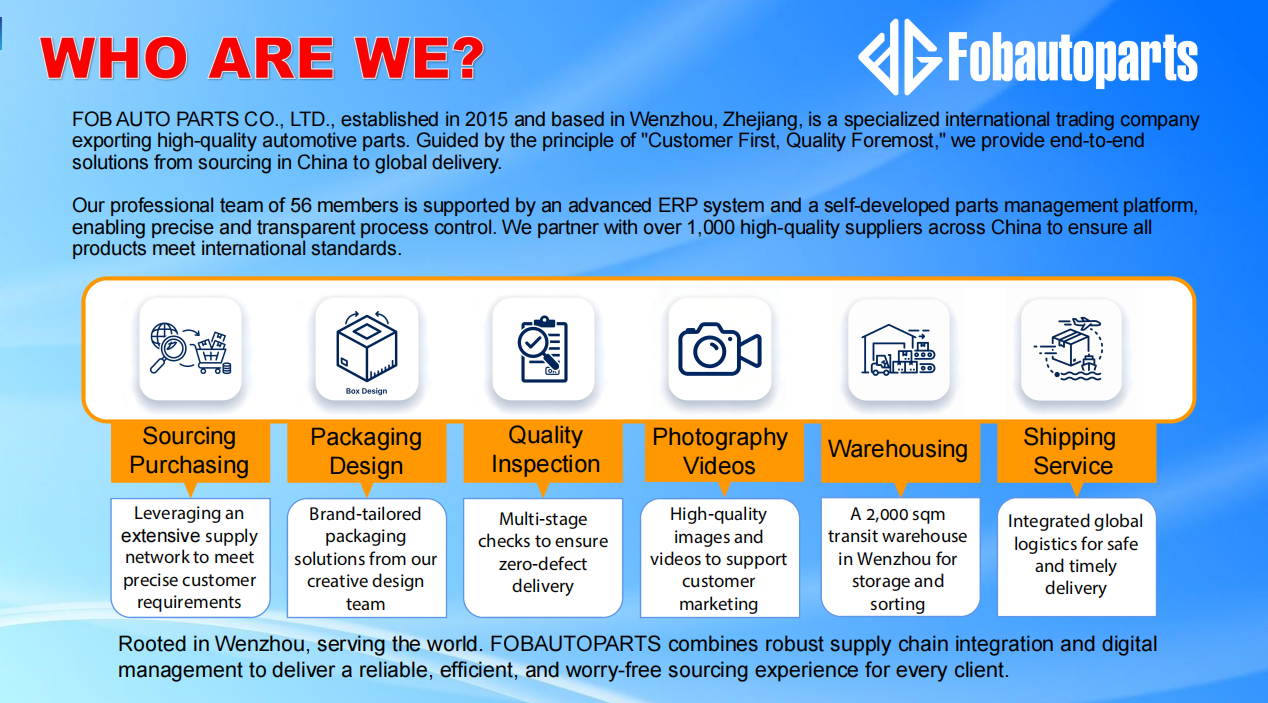
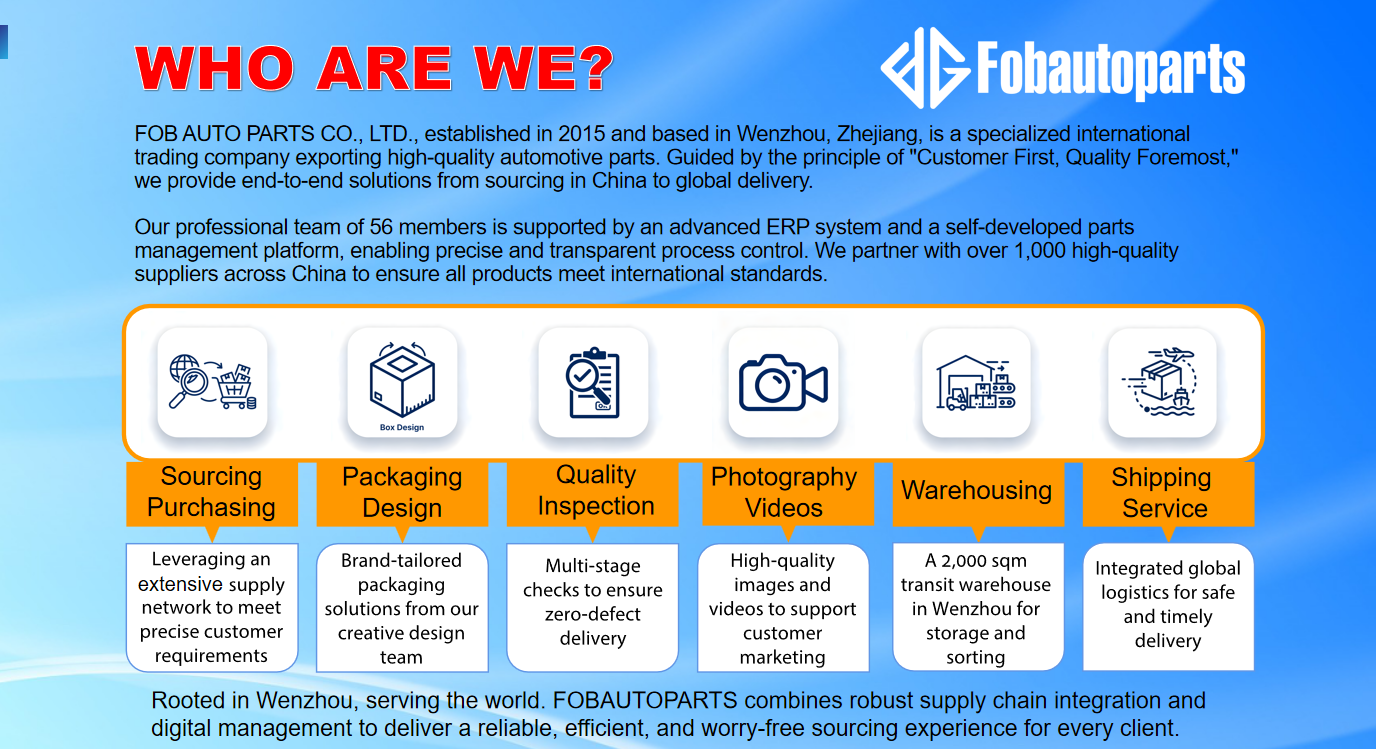
At Fobautoparts, we’ve moved beyond the role of a traditional middleman. We provide an intelligent supply chain platform designed to turn complex procurement into a streamlined, digital collaboration.
Why Forward-Thinking Businesses are Choosing Fobautoparts:
| Feature | The Fobautoparts Advantage |
| ⚡ Speed | Intelligent Matching reduces response times from days to mere minutes. |
| 📦 Variety | One-Stop Fulfillment for both standard and custom parts. |
| 🔍 Visibility | End-to-End Transparency—track every stage from inquiry to delivery. |
| 👥 Human Insight | A 16-member expert team reviews every match for optimal quality. |
🛠️ 4 Keys to Empowering Your Supply Chain
1. Rapid Response through AI-Driven Matching
Don’t wait for a sales rep to check a spreadsheet. Submit your list—regardless of the categories—and our system instantly matches you with the ideal factory from our network of 1,000+ rigorously vetted suppliers.
2. One-Stop Multi-Category Fulfillment
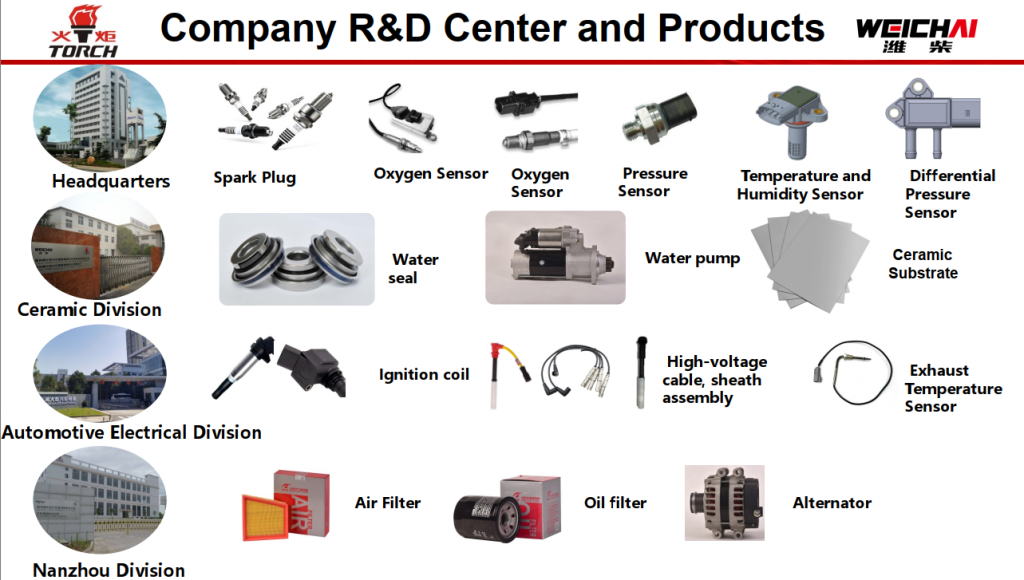
From standard components to custom parts, we cover the full automotive and motorcycle spectrum. One partner, fewer hassles. Stop chasing multiple invoices and start scaling!
3. Real-Time Risk Management
In modern logistics, information is power. Our platform provides real-time updates from the moment of inquiry through production and quality inspection. Stay informed, manage risks, and control outcomes.
4. Expert Team Collaboration
We combine system speed with human insight. Our 16-member procurement team refines every match, ensuring that technology is always backed by industry expertise and strict quality control.
💡 Conclusion: More Than a Supplier, a Strategic Partner
The goal of Precision Sourcing isn’t just to sell you a part; it’s to integrate into your operations and remove the friction that slows you down. When your supply chain is transparent, intelligent, and fast, your business is free to scale.
“With Precision Sourcing, you gain more than a supplier—you gain a strategic partner integrated into your operations.”
📩 Ready to Optimize Your Procurement?
Stop struggling with fragmented supply chains. Contact Fobautoparts today to experience the future of digital automotive sourcing.